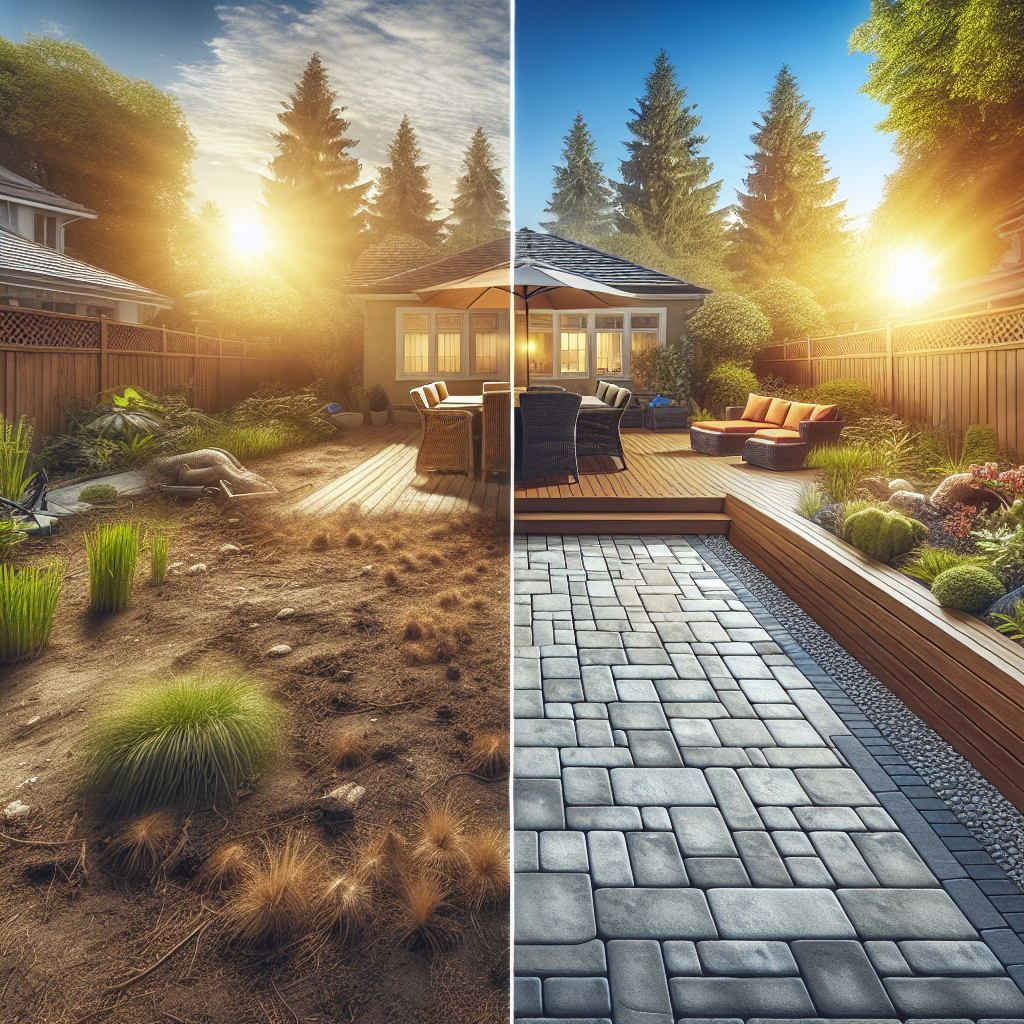
Homeowners investing in a paver patio, retaining wall, or outdoor living project make their decision based on what they can see. Before your phone ever rings, they’re online evaluating your work visually. That’s why hardscaping before-and-after photos are the single highest-conversion marketing asset available to hardscape contractors — and why most hardscaping companies are leaving serious revenue on the table by not using them effectively.
Why Before-and-After Photos Drive Hardscaping Conversions
Hardscaping is a visual transformation business. A cracked, overgrown concrete patio becomes a stunning paver outdoor living space. A muddy, eroding backyard slope becomes a tiered retaining wall with built-in seating. A plain concrete driveway becomes a decorative stamped surface that sets the home apart in the neighborhood. These transformations are dramatic, immediate, and emotionally compelling in a way that bypasses rational analysis and connects directly with the homeowner’s imagination of what their own property could become.
No amount of descriptive writing matches what a well-executed before-and-after image communicates in two seconds. Hardscaping websites that use strong before-and-after photography consistently convert 40 to 80 percent more visitors into leads than those using generic photos or stock imagery. The investment in capturing this content from every completed project pays off in every lead that comes through your website for years afterward.
Our full marketing services for hardscape contractors are built around converting the visual quality of your work into a digital presence that generates consistent, qualified leads.
What Makes a Before-and-After Photo Actually Convert
Consistent Angle and Framing
A before-and-after comparison only works when both images are taken from the same angle and distance. A before photo shot from the back corner of the yard and an after photo shot from the patio door create a jarring comparison that undermines the impact. Set up your before shot at the beginning of every project from the angle that will best show the finished result — then return to that exact spot when the job is complete.
Timing and Lighting
Golden hour — the hour after sunrise or before sunset — makes hardscaping photography dramatically more compelling than flat midday light. The warm tones bring out the richness of natural stone, brick, and pavers in a way that cool overhead light simply doesn’t. For after photos specifically, take them after the site is completely clean, any furniture or accessories are arranged, and any landscape elements are in place. The finished photo should look like it belongs in a design magazine, not a construction site.
Context and Scale
Include enough of the surrounding environment to give the transformation scale and context. A close-up of beautifully laid pavers without the house, the yard, and the sky doesn’t tell the story of what the homeowner gained. The full picture — showing the home, the new outdoor space, and how they relate to each other — is what triggers the “I want that for my yard” response in the homeowner viewing your portfolio.
Where to Use Hardscaping Before-and-After Photos for Maximum Impact
- Service pages: Embed before-and-after images directly within the copy of each service page — paver patios, retaining walls, outdoor kitchens, driveways — adjacent to the description of that specific service.
- Homepage: Feature your most dramatic transformation above the fold or in a prominent hero section. This is the first visual impression a homeowner gets and should represent your best work.
- Google Business Profile: Upload before-and-after photos regularly as part of your GBP management — profiles with more photos receive significantly more views and clicks than those with minimal images.
- Social media: Before-and-after content performs exceptionally well on Facebook and Instagram, especially in local community groups where homeowners are actively looking for contractor recommendations.
- Google Business Profile posts: A weekly GBP post featuring a before-and-after from a recent project keeps your profile active and gives browsing homeowners fresh visual evidence of your work quality.
Turning Project Photography Into a Systematic Process
The biggest obstacle to consistent before-and-after content is workflow — remembering to take the before photo at the start of every job before any work begins. Once that moment passes, it’s gone. Here’s a simple system to make it automatic:
- Before the first crew arrives: Assign one person on every job to photograph the existing conditions from three to four key angles before any equipment or materials are brought in.
- During the job: Capture progress shots, especially for phases that won’t be visible in the finished product (sub-base preparation, base material compaction, drainage installation).
- At job completion: Return to the same angles from the before photos. Clean the site completely before shooting — no tools, equipment, or debris visible.
- Upload and organize immediately: Add photos to your Google Business Profile, your website project gallery, and your social media channels within 48 hours while the project is fresh and seasonal.
Once this process is embedded in your crew’s standard workflow, you’ll build a library of compelling project content that works for your marketing for years. Combined with GoHighLevel automation to request a review from every client after completion, each project generates both visual content and social proof simultaneously.
How Before-and-After Content Supports Your Local SEO
Project photos don’t just convert visitors — they also support your local SEO performance in several ways. Images uploaded to your GBP with descriptive file names and alt text (e.g., “paver-patio-installation-[city].jpg”) contribute to your profile’s relevance signals. Project case study pages on your website that include before-and-after photos, a project description, and location keywords create additional indexed pages that rank for location-specific searches. And the engagement your photos generate on social media — saves, shares, comments — sends positive signals to algorithms that increase your organic reach over time.
Hardscaping companies that build a consistent project photography library and use it across their website, GBP, and social channels typically see a 30 to 50 percent improvement in organic lead quality within six months.
Frequently Asked Questions About Hardscaping Before-and-After Photography
Do I need a professional photographer for hardscaping before-and-after photos?
Professional photography significantly elevates the quality of your marketing materials, but it’s not required to start. A modern smartphone with a good camera, used consistently at the right time of day and from the right angles, can produce highly effective before-and-after content. The most important factors are consistency of angle, good lighting (golden hour is your best friend), and a completely cleaned site for the after shot. Start with your phone, build the habit, and invest in professional photography as your business grows.
How many before-and-after photos should a hardscaping website have?
There’s no upper limit — more is generally better, as long as the quality is consistent. As a starting point, aim for at least three to five before-and-after comparisons per major service type (paver patios, retaining walls, driveways, outdoor kitchens). The goal is to show enough variety in scale, style, and material that any homeowner visiting your site can find a project that resembles what they’re envisioning for their own property. A portfolio of 20 or more strong before-and-after projects is a meaningful competitive advantage.
Where should before-and-after photos be placed on a hardscaping service page?
Place before-and-after photos within the body of the service page, adjacent to the description of the specific service they represent — not confined to a separate gallery page. A homeowner reading your paver patio service page should see a compelling before-and-after image without having to navigate away from the page. Photos placed in context, near relevant copy and calls to action, convert at much higher rates than photos organized into standalone galleries that most visitors never click.
Can before-and-after content help my Google Business Profile ranking?
Yes — in two ways. First, profiles with more photos receive more views and clicks, which are engagement signals that Google weighs in local ranking. Second, Google now has image recognition capability that can identify the content of your photos — meaning project photos of completed hardscaping work contribute to your profile’s relevance for hardscaping-related searches. Upload new project photos to your GBP regularly — not just once at setup — and make sure they include a variety of surfaces, styles, and project types.
Start Capturing the Content That Sells Your Work
Every hardscaping project you complete is a marketing asset waiting to be activated. The before-and-after transformation your crew creates on every job is the most persuasive sales tool you have — but only if it’s captured, organized, and placed where homeowners will see it when they’re deciding who to call.
If you want help building a content and marketing strategy that turns your project photography into a consistent source of high-quality leads, get in touch with us today — we’ll show you exactly how to put your best work in front of the homeowners who are ready to invest in it.


Leave a Reply